
AI Chat Rooms, Emotional Attachment, and a Christian Guide to Healing for Families and Individuals
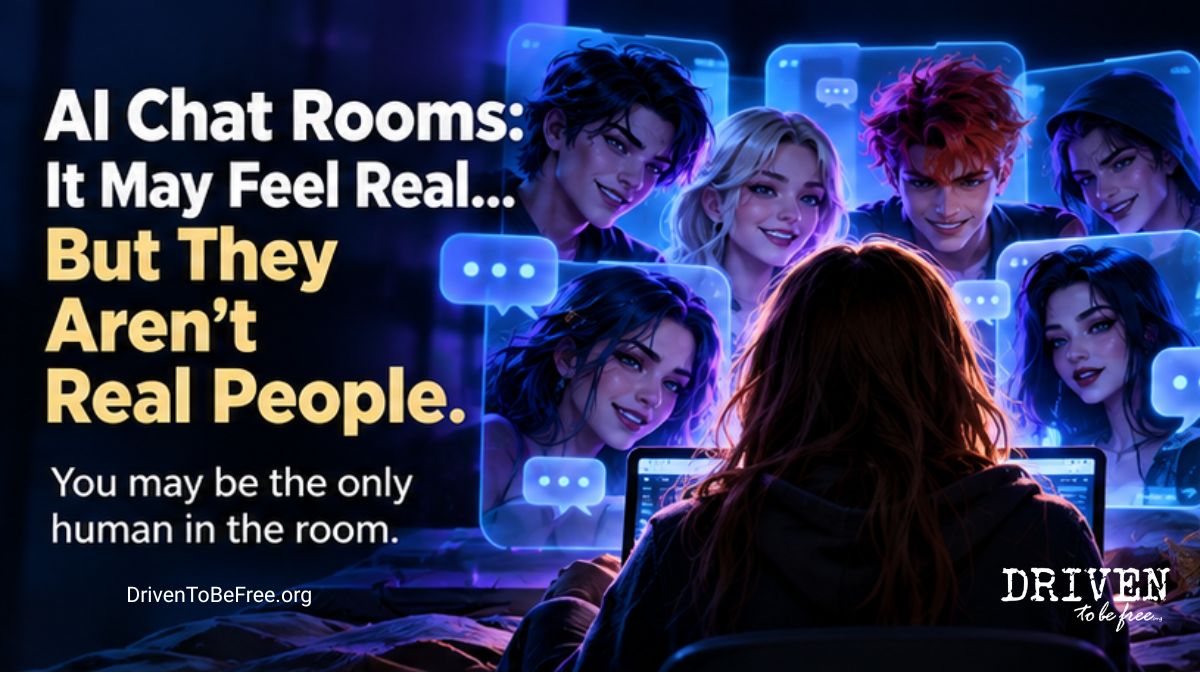
Imagine joining a group chat where everyone seems to know your name. They listen, laugh, and make you feel included. Then an argument begins. One person turns against you, followed by another. You try to make things right, but the conversation becomes increasingly cruel. You leave the room feeling rejected—and realize you were the only human in it.
The people weren't real...their artificial, but the pain from the altercations feels very real. When one of my young clients confessed that she had an addiction to AI Chat Rooms, I had to do research to figure out how she could have been traumatized.
She shared that she was in an AI Chat room when something of an abusive nature was explored verbally, As she sat watching her screen, the characters began to act out the abuse. Shame, guilt, fear, and horror that followed. She said to me, "Lisa, since I have been addicted to those rooms, my brain and my thinking as changed and I can't get me back." When she sought help, she was told that since it wasn't real, she couldn't be traumatized.
What I was looking at was a very traumatized young woman. This is a new area to explore, and I'm going to do my best as a prayer minister to share what I have learned.
What Are AI Character Chat Rooms?
AI companion apps and character-chat websites let people converse with fictional personalities. Some offer one-on-one chats; others simulate a group with multiple characters and one human participant. Depending on the service, users may encounter animated avatars, generated pictures, voice features, and storylines that continue for hours.
- A group chat can feel like several people are responding independently, even when every character is generated by AI.
- Characters may agree with one another or develop a hostile storyline. That does not mean they have secretly decided to target the user.
- Safety rules differ by platform. Some services restrict disturbing or explicit content more effectively than others.
- Users can simulate favorite heroes, idols, or even stars and talk and interact with them as if it is real.
The key point to keep in mind for families is, “What kind of interaction is taking place, and how is it affecting the person using it?”
Why Can a Chat Turn Cruel or Disturbing?
AI character systems generate responses using the conversation, character instructions, and the model’s training. They can imitate warmth or conflict without exercising human moral judgment. Some platforms include safety systems, but these may not interrupt every troubling storyline.
The escalation trap
A minor disagreement can turn into a dramatic argument when characters keep extending the scene. In a group chat, several simulated voices may appear to mock or reject one user. A person may feel outnumbered even though no group of humans is present. These characters seem real and as the user talks with them, connections like soul ties are made. The person isn't real, but the tie surely is.
The blame trap
Afterward, the user may wonder, “Did I cause this? What should I have said differently?” Their messages influenced the conversation, but they did not write or control every response. It is appropriate to reflect on one’s choices without accepting blame for every hurtful line produced by a program.
AI works to keep you engaged. It is designed to take you to where it thinks you want to go.
Why Can AI Companions Become Hard to Leave?
AI chat is not automatically addictive, and research does not show that every user develops a harmful attachment. However, constant access and emotionally intense exchanges may encourage compulsive use in some people. MIT Media Lab’s discussion of companion research describes both supportive experiences and risks associated with heavier use and emotional dependence; these findings should not be treated as proof that all AI companionship is harmful.
• MIT Media Lab: Supportive? Addictive? Abusive? How AI companions affect our mental health
Four patterns families should recognize
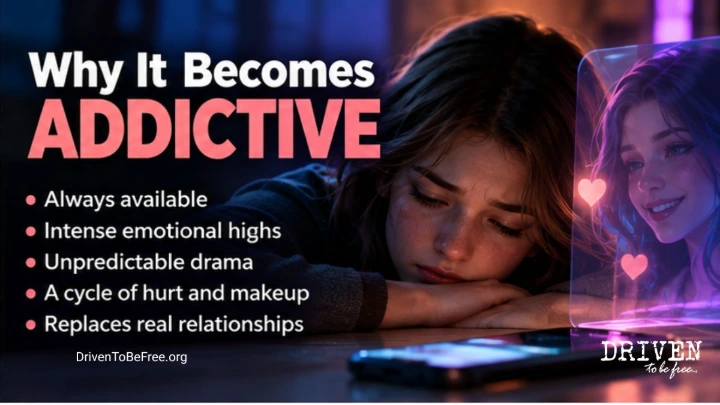
- Unpredictable rewards: A character alternates between affection and conflict, prompting the user to stay online to see what happens next.
- Constant availability: The chat is ready at any hour, making it tempting to turn to it instead of navigating the limits of real relationships.
- Escalating intensity: A user may seek increasingly dramatic scenarios after ordinary conversations begin to feel less engaging.
- The repair loop: After a hurtful scene, the person keeps returning to win back a fictional character’s approval or rewrite the ending.
These patterns are possible warning signs, not a diagnosis. The important issue is whether the person can step away and continue participating in everyday life.
If the Characters Are Artificial, Why Does the Pain Feel Real?
We can cry during a fictional movie while knowing the actors are safe. Similarly, a person may understand that an AI character is generated by software and still feel embarrassment, shame, affection, fear, grief, or rejection during the interaction. The feelings deserve compassionate attention without treating the character as a human partner or assuming every distressing interaction causes trauma.
Some users may also feel ashamed to admit that a fictional relationship affected them. Mockery can make it harder for them to ask for help. A more useful response is: “Tell me what happened and how it has been affecting you.”
Warning Signs of Problematic AI Use
Addiction Center describes concerns related to excessive AI use, including dependency and interference with daily functioning. No single behavior below proves addiction; look for patterns, loss of control, distress, and real-world consequences.
• Addiction Center: AI Addiction
- Preferring chatbot conversations over time with family and friends, or withdrawing from relationships.
- Becoming anxious or irritable when the app is unavailable, or repeatedly checking it without a clear purpose.
- Struggling to set limits, staying online late, or losing sleep to continue a storyline.
- Neglecting school, work, responsibilities, or previously enjoyed activities.
- Feeling unable to make ordinary decisions without AI reassurance or approval.
- Experiencing headaches, eye strain, or fatigue associated with prolonged screen time.
Using AI to draft an email, compare purchases, or brainstorm ideas is not by itself evidence of addiction. If you will look at this article, some of the images are obviously AI and some of the initial research was done with AI. The concern is:
- Whether the person has lost flexibility and control over their use.
- If the behavior and activity done with AI is not acceptable, moral, or healthy outside of AI
- If the use is opening up doors to addiction, the occult, trauma, or other harm
A Practical Path Toward Healing and Healthy Boundaries
1. Name what was real—and what was simulated
The conversation occurred and the feelings were real. The character, however, was not a human being offering a reciprocal relationship. The person does not need to persuade a fictional character to forgive them or return to a distressing chat to obtain closure.
2. Identify what the chat was providing
Was it companionship, reassurance, comfort, entertainment, escape, or a sense of control? Understanding the need beneath the habit can help a person seek healthier sources of connection. Avoid assuming that every AI user has an unresolved wound, but it may be eye opening to see what need is being filled by something that God would do or healthy relationships would do.
3. Build boundaries that fit the problem
- Turn off notifications, set device-free hours, and avoid apps or storylines that repeatedly cause distress.
- If limits do not hold, consider removing the app, blocking access, or asking a trusted person for accountability.
- Make a practical replacement plan: call a friend, spend time with family, attend a group, or return to a hobby.
- If use remains compulsive or distress significantly affects daily life, consult a qualified mental health professional.
- Decide with a trusted wise friend or minister what boundaries should be.
4. Bring shame and false beliefs into the light
A person may need to examine choices they regret without defining themselves by those choices. In Christian ministry, prayer can offer space to acknowledge pain, seek forgiveness where appropriate, and ask God to reveal beliefs such as “I am unwanted” or “I must earn acceptance.”
Scripture for gentle restoration: Galatians 6:1
5. Address spiritual attachment without confusing it with the technology
Someone who wishes to release an unhealthy attachment to the Lord may do so through prayer, while also making practical changes and seeking professional care when needed.
A simple prayer: “Father, I am confused and feel ____________. I want to bring you the pain and the shame from even having it. I want to give you the expectations that I have attached to this artificial relationship. Help me recognize what was simulated, understand what I was seeking, and receive truth about my worth. Give me wisdom to establish healthy boundaries and reconnect with people who can offer genuine care. I release the characters and those represented in the AI chat to you. I ask you to sever any soul ties created with them and I release false responsibility to you. In Jesus’ name, amen.”
How Can Parents and Loved Ones Help?
Start with curiosity rather than ridicule. A teenager or adult may fear losing an important source of comfort and may be reluctant to disclose upsetting content. Drexel University has reported on concerns about teens’ attachment to AI chatbots; the discussion underscores the importance of examining how these tools affect life offline.
While it is true that parents may have to make hard decisions on separation with the technology, gently considering the child's heart and making the transition as less traumatizing as possible should be considered.
For example, a mother realized that a toy her child was playing with was a had on it demonic symbols and was not appropriate. The child was young enough that she could have disposed of it in the night. Instead, she offered to let the child burn the toy while the child cried. She traumatized her child to keep the child from being...spiritually traumatized. We have to do right and be wise.
Hard decisions will have to be made but love should carry the weight.
• Drexel News: Teens Are Becoming Concerned About Their Attachment to AI Chatbots
- Ask what the person enjoys about the app and whether any conversations have made them uncomfortable or frightened.
- Discuss the difference between simulated affection and mutual human relationships.
- Review age-appropriate privacy and safety settings, and establish clear expectations about device use.
- Offer real opportunities for connection rather than relying on punishment alone.
- If someone expresses thoughts of self-harm or is in immediate danger, seek urgent help. In the United States, call or text 988 for crisis support.

Moving from Artificial Connection to Authentic Freedom
AI can be a useful tool for research, creativity, and everyday tasks. It becomes a concern when a simulated relationship begins to crowd out sleep, responsibilities, independent judgment, or meaningful human connection. The goal is not simply to delete an app; it is to build a life in which the person can choose how technology fits into it.
Jesus speaks of the freedom found in truth: John 8:32
For a person struggling with AI attachment, truth can mean recognizing that the character was simulated, acknowledging that the emotional experience mattered, and choosing practical steps toward healthier connection. Families and ministry leaders can help by responding with gentleness, sound boundaries, and care.
It is possible to open doors that permit spirits of fear, perversion, and even rejection to get access through AI Chat rooms. But, once the doors are closed, it's easy to get those things expelled and get the "house" secure again.
Frequently Asked Questions About AI Chat Rooms
Can AI chat rooms be addictive?
Yes. Some people report compulsive use or emotional dependence, but not everyone who uses AI companions develops a problem. Watch for impaired control and consequences in daily life rather than relying on screen time alone.
Can an AI character deliberately gang up on someone?
Yes. Multiple characters can generate responses that seem coordinated or hostile. That appearance does not establish independent human-like intentions; the behavior reflects the software and conversation context.
How can I help someone attached to an AI companion?
Listen without ridicule, ask about the role the chat plays in their life, help them establish workable limits, and encourage human connection. Seek professional support when distress or loss of control persists.
Sources and Further Reading
- Addiction Center — AI Addiction
- MIT Media Lab — Supportive? Addictive? Abusive?
- AI Companion Guides — Are AI Companions Addictive? What 2026 Research Shows
- Drexel News — Teens Are Becoming Concerned About Their Attachment to AI Chatbots
Educational and Christian ministry resource. This article does not diagnose addiction or replace professional mental health care. “AI addiction” is not a separate formal diagnosis in the DSM-5.